
Rescue on the water: Come Back Alive Foundation presents study on first aid and evacuation during waterborne operations
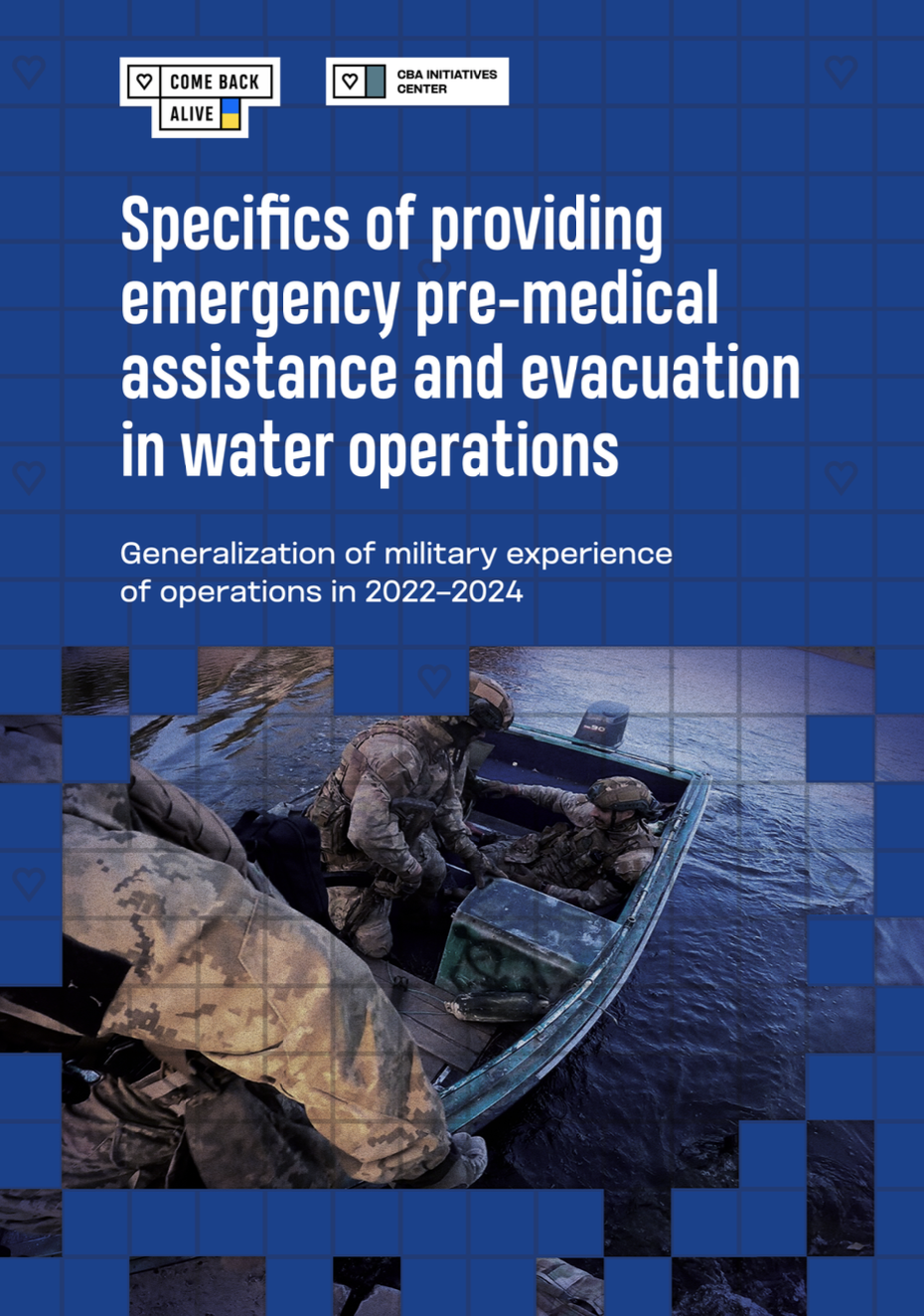
The instructor department of the military division of the Come Back Alive Foundation, in cooperation with the CBA Initiatives Center, has published a new report: Specifics of Providing First Aid and Evacuation During Operations on the Water.
The document systematizes the field and analytical experience of combat medics from various units.
Modern military operations involving water are a new challenge not only for the Armed Forces of Ukraine, but also for armed forces globally. Such operations are not yet reflected in existing doctrines or combat medic training systems. This report represents the first consolidated overview of practical experience gathered by the Territorial Defense Forces, the Ground Forces, the Special Operations Forces, the Main Intelligence Directorate, the National Guard, and the State Border Guard Service. It aims to contribute to the development of future protocols for operations in waterborne environments.
The report outlines:
- the planning and preparation involved in providing aid and conducting evacuations, as well as the key challenges medics face in these conditions — for example, the need to provide prolonged care due to extended evacuation times, unstable weather, and exposed routes;
- recommendations for personnel training and equipping, outfitting watercraft, and supplying both transportation and medical resources — with particular attention to preventing hypothermia in both medics and the wounded;
- specific challenges and procedures for transporting and evacuating the wounded by water.
The appendices include descriptions of commonly used boat types, their specific operational characteristics, and a sample checklist for combat medics.
The study's recommendations highlight the importance of coordination and horizontal communication during waterborne missions, the development of clear operational algorithms, increased efforts to extend stabilization time for the wounded, the establishment of interception and triage points, and the need for ongoing review and adaptation of protocols to reflect changing conditions.
Поділитись