
Food as a Factor of Defense Capacity: Should the Reform of Basic Military Training Begin with Meals?
The National Army Museum in London opens its section on food in the British military with a simple truth: «To be effective, an army relies on good and plentiful food, especially on campaign. Without meeting this vital need, the success of any operation may be compromised.»
The well-worn phrase «an army marches on its stomach,» attributed variously to Napoleon and Frederick the Great, is often interpreted differently in Ukrainian and Russian, where the emphasis falls on quantity — «an army marches while the stomach is full.» Yet, as the examples below illustrate, the English version is closer to the truth: the issue is less about how much, and more about how good.
Food was mentioned repeatedly by respondents in our study of basic military training. Feedback ranged from neutral to negative, with meals at times described as a primary demotivating factor. Food must not only be sufficient — it should be fresh, palatable, nutritious, and served in a way that respects both comfort and dignity.
Why reform military catering — and what’s wrong with it now?
Who’s Eating at Training?
Recruits entering basic training typically come straight from civilian life. They immediately begin comparing their new environment to their previous daily lives — meals, healthcare, facilities, and interpersonal treatment — seeing this as a reflection of how the state values them. This has a direct impact on motivation, both to train and to fight. It also influences the mobilization narrative: recruits actively share their impressions with friends and family. Food becomes a key variable in whether these informal reviews encourage or dissuade others from enlisting.

Through mobile ethnography — regular communication with recruits via messaging apps — we studied what shapes motivation during training. Over the past five months, we focused specifically on food and examined two examples of alternative field kitchens currently operating in the Ukrainian Armed Forces.
Who’s Doing the Cooking?
Training centre kitchens are typically staffed by a permanent military cook and several recruits assigned to kitchen duty either on rotation or as a disciplinary measure. These individuals generally lack both the desire and skills to cook. Each shift requires retraining and close supervision. Moreover, time spent in the kitchen reduces time for training — often irrecoverably.
Recruits frequently fall ill during training. Consequently, people with colds or other illnesses may be allowed to handle food. Respondents noted that when food was prepared or served by someone visibly unwell and without proper screening, it discouraged them from eating altogether.
Military cooks typically enter service after completing outdated civilian training programs. Many, for instance, are unfamiliar with «technical cards» — standardized cooking instructions that include ingredients, measurements, preparation steps, and serving guidance. Once in service, they have limited opportunities for professional development, which undermines morale and performance.
A stable, professional kitchen team — motivated and given room to grow — is essential for improving food quality in the military.
What’s on Hand?
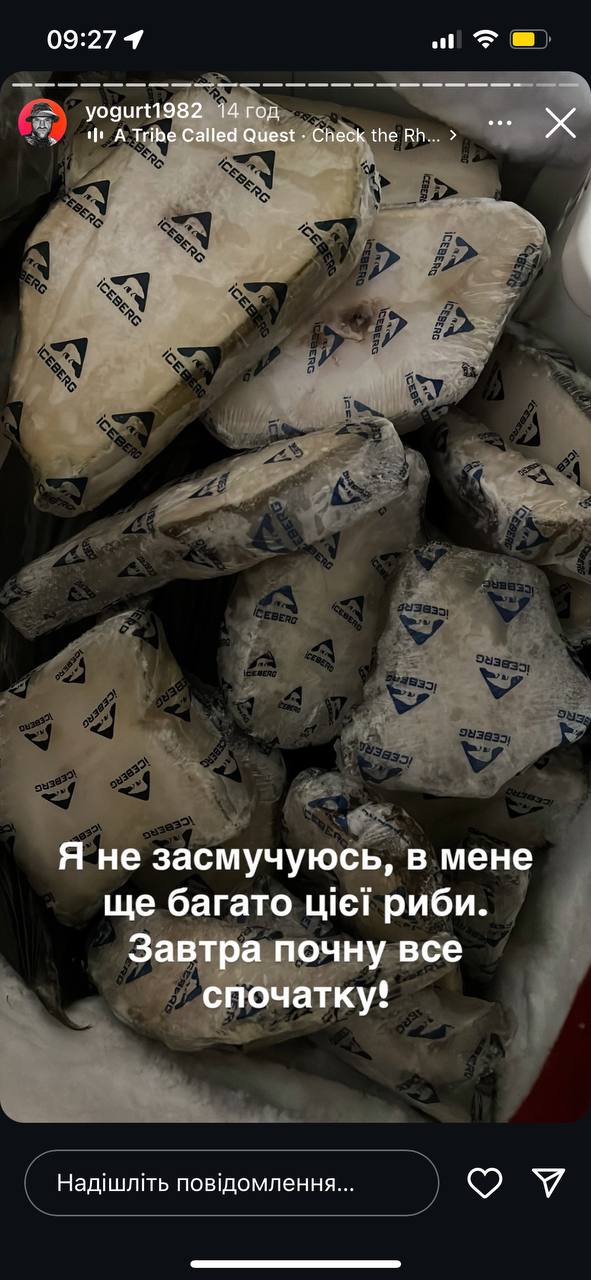
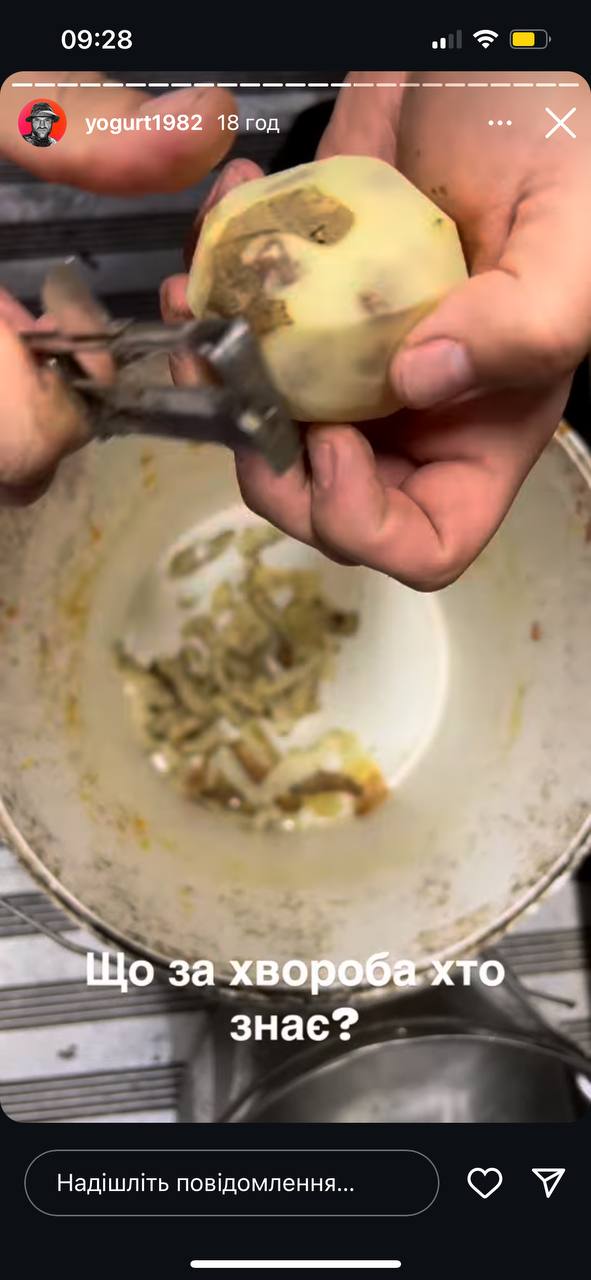
Training centers source food from civilian suppliers through open tenders, where the lowest bid usually wins. This often results in low-quality ingredients, requiring strict quality control on-site. Kitchen staff must manage returns, complete documentation, repack spoiled goods, and coordinate with warehouses. There’s often no time to await replacements, so cooks are left to «improve» poor-quality items into something just edible.
Reliable, high-quality supplies are a necessary condition for better meals, and for motivating both kitchen staff and the recruits they serve. As one cook, Oleksii Vykhrenko of the 47th Mechanized Brigade, noted, quality tends to improve temporarily after complaints — but the problems soon return.
Below are Oleksii Vykhrenko’s stories in social media about the daily life of a military cook. He often mentions food quality issues.

Where’s the Cooking Done?
According to Vykhrenko, cooking conditions are one of the three pillars of food quality — alongside ingredients and staff motivation. He says poor equipment makes the job harder and morale lower. Recalling one older field kitchen, he said: «Field kitchen-130 smokes. If someone oversleeps and doesn’t light it on time, it’s chaos — you’ll be cooking and lighting it simultaneously and may not get breakfast out on time.»
While we did not focus in detail on kitchen infrastructure, it is clear that poor facilities hinder effective work. Yet, even within this outdated system, there are alternative models that suggest more efficient solutions — both within and beyond the military.
Vykhrenko’s mobile field kitchen, consisting of a food truck and a refrigerated vehicle, currently serves 163 troops.


Another example, from the Magic Food Army charity, provides for 700 personnel. Their kitchen delivers vacuum-sealed meals to refrigerated storage hubs along the front line, allowing units to collect them as needed.


Efficient logistics are critical. Recruits may spend hours each day walking over 10 km to and from dining areas. Magic Food Army addresses this by delivering ready meals to cooling units stationed near troops. Vykhrenko operates his food truck nearby. In Latvia, hot food is delivered in containers to the training grounds and distributed by duty recruits, who then return used dishes to the civilian contractor’s vehicle. These practices ease internal logistics, free up time and personnel, and improve training quality.
What’s on the Menu?
Respondents rarely complained about portion sizes. They did, however, raise concerns about recipe quality, ingredient freshness, taste, presentation, and hygiene.
«The food here is as I expected—but that’s not a compliment. I’d give it 3 out of 10. You won’t starve, but you won’t enjoy it either.»
undefined
«You won’t go hungry, but it tastes worse than civilian canteens by a wide margin.»
undefined
By the time food reaches remote training areas, it often becomes inedible. One recruit quipped, «You could armor a BMP with those noodles.»
The cadets requested modernized dishes, with options for people with various dietary restrictions:
«Regarding the dining room, the food is so greasy that it's hard to wash the bowl afterwards.»
undefined
There were also positive examples:
«No complaints. It’s good, consistent. It’s mostly porridge, but it’s well-prepared, satisfying, and no one in the unit has issues with it.»
undefined
In comparison with such kitchens, the field kitchens run by Vykhrenko and Magic Food Army show what good military catering can look like — and how it can sustain personnel through both training and deployment.
Share