“Russia’s goal is to make us fear each other” – Maria Kucherenko on Putin and the prospect of ending the war
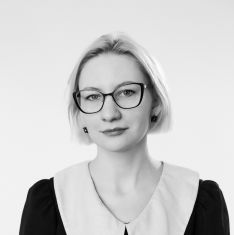
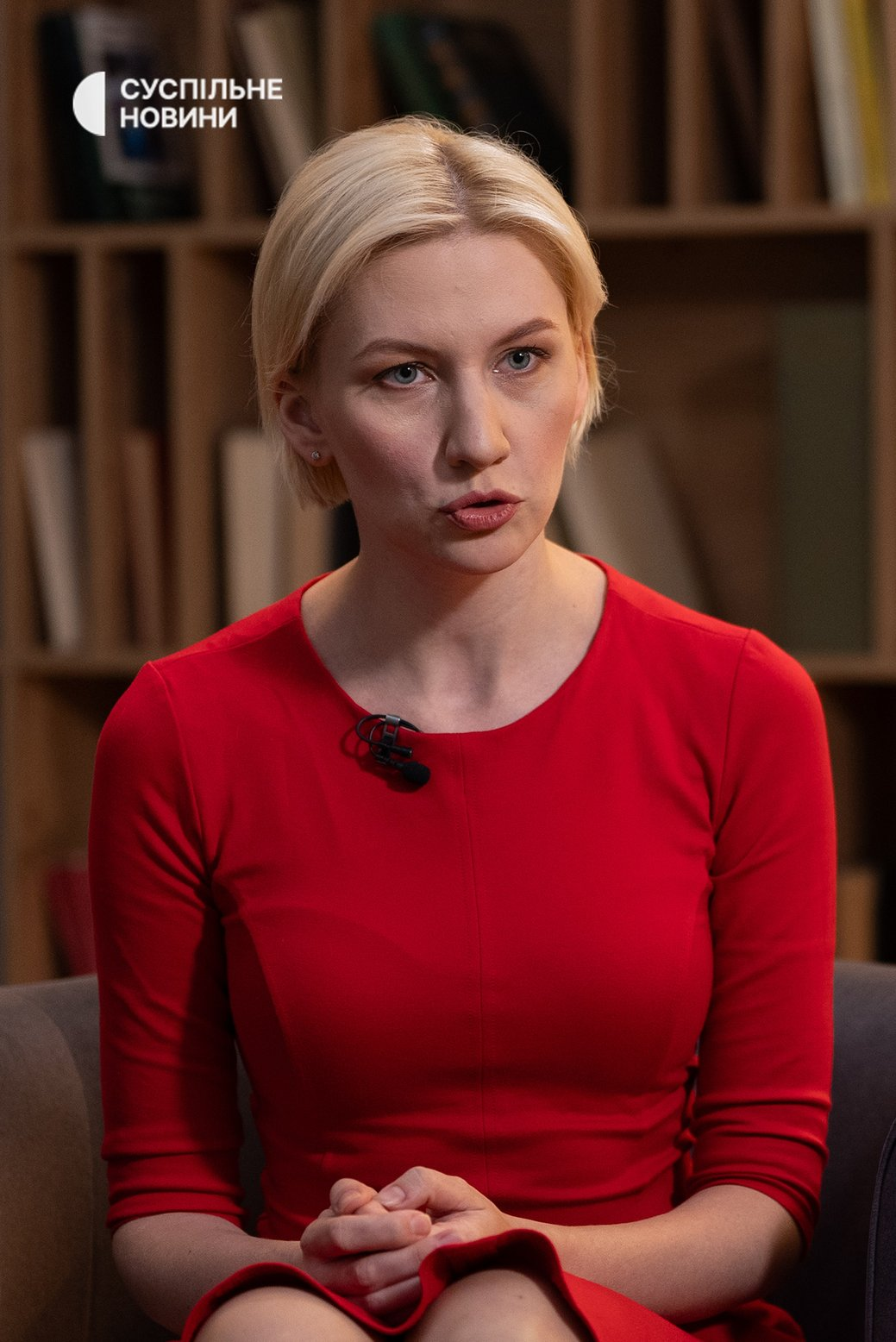
Maria Kucherenko is a senior analyst at the Come Back Alive Initiatives Center, focusing on Russian elites and security services. Suspilne spoke with her amid Ukraine and the international community’s efforts to draw Russia into negotiations to end the war. Is Putin genuinely interested? Who or what influences him now? And how is Russia attempting to destabilize Ukraine beyond the front line? Maria shares her views in the Removska Interview. Watch the video version of the conversation here (in Ukrainian).
Maria, does Vladimir Putin want an end to the war? For half a year now, we’ve seen attempts to draw Russia into some form of peace process, yet doubts remain about whether it has any real interest.
In fact, attempts to involve Russia in a peace process have been ongoing for more than 11 years. Ukraine has always sought to prevent this war. It's not us who were the aggressors.
Ukraine has consistently tried to involve the Russian Federation in negotiation formats: joint efforts to release prisoners, establish humanitarian corridors, and agree on ceasefires — even temporary ones. But the outcome has always been the same: in the Trilateral Contact Group, the Normandy Format, and both stages of Istanbul talks, Russia showed no genuine interest in a security settlement.
So my answer is no — Putin is not interested in ending the war. Otherwise, a single order from him would suffice.
However, he is interested in negotiations as a tactic. This has been Russia’s approach for years: once Putin enters talks, he immediately demands sanctions relief and recognition of his negotiating weight, without any tangible effort to improve security.
What surprises me, though perhaps naively, is that while Russia pretends to be ready for talks, we also see coordinated strikes on Kyiv and other cities. Russia demonstratively inflicts heavy losses on Ukraine while simultaneously assuring, in Istanbul or on the phone with Trump, that “we’re ready for negotiations.” How do you explain this?
Our ‘patient,’ Putin, is a KGB veteran. In 2022, he ventured into an unfamiliar arena — a purely military operation. It brought Russia nothing militarily — sanctions pressure increased sharply, and building alternative alliances became much more difficult.
That’s why, at the end of 2022, I began saying that Russia would shift from the so-called “special military operation” to a “counter-terrorist operation.” This new operation is no longer subordinated to the General Staff but to the FSB.
What does this mean in practice? That the war is no longer purely about military actions but also about destabilization by special services inside Ukraine?
Exactly. While there has been no formal change, the emphasis shifted — from purely military methods to a combined approach. The pressure on the front line continues, but more effort is directed at destabilizing Ukrainian society, portraying us as incapable of negotiations, even as terrorists, suggesting Ukrainians use unlawful methods, disrupt world order, threaten neighbors’ security, and so on.
From late 2022, we saw this in practice. Negotiating with Trump while striking civilian targets in Ukraine mirrors a pattern familiar since the Second Chechen War. The aim is to pressure Ukrainian society with a simple slogan: “Better a horrible end than endless horror.” That’s why Russians strike playgrounds and hospitals, hitting the most sensitive points in people’s hearts.
I always insist: we should not depict the enemy as stupid or unprepared. Russia is a sophisticated adversary, which is why this war has dragged on for 11 years. They understand far more about us now than in 2014. Operational psychologists of FSB and the General Staff know exactly what they are doing.
On the other hand, if we consider the strikes on major cities as a way to force Ukrainians to demand an end to the war — do you see this as effective? As journalists reporting from these sites, we usually see anger and hatred toward Russia. People are not saying, “Let’s immediately come to an agreement”.
Attacks alone can’t force the public to demand agreements with Russia. But the broader strategy combines attacks with information operations.
For example, after the shelling of “Okhmatdyt,” bloggers suggested negotiating because “children are suffering.” Russia employs these combined methods to influence public perception.
At the same time, Russia does not aim to blame Ukraine for the attacks. Its goal is to create a Dostoevsky-like ambiguity: an atmosphere of “I don’t know who is right and who is wrong,” blurring lines between victim and aggressor. This is operational and criminal psychology at work: instilling fear and uncertainty in Ukrainian society.
The intent is to sow doubt: “What if I behave differently — maybe they won’t strike me?” Russia experts not only in operational tactics but also in criminal psychology. They want us to feel like victims should feel. Unfortunately, in some segments, they succeed.
Of course, I'm not saying that our intellectual elite, military personnel, and their families think this way. But there is an audience that will accept such a position if we do not replace it with a strong counter-narrative.
Not just refuting bloggers, but providing precise, comprehensive facts to fill the information vacuum is critical — to prevent Russia from occupying niches of ignorance and frustration.
By the way, during previous exhausting negotiations in the Trilateral Contact Group and Normandy Format, Russia often used the same principle, filling the information void with its own theses first. Everyone waited with fear and impatience, especially shortly before the escalation of hostilities in 2022: what would Kozak say? What would our delegation say? The Russian Federation acted very competently, presenting its positions first.
And Ukraine was forced into a reactive stance.
Yes.
Speaking of a counter-narrative, what do you mean? Could you give an example?
Imagine a major attack occurs. One could respond: “The Russian Federation launched this attack. The Main Directorate of the General Staff is responsible for it. Chief of its General Staff is Igor Kostyukov. Responsible Unit: Colonel X, Major Y. Our special services have neutralized usch and such members of this unit. Ukraine will not attack civilian infrastructure in Russia but reserves the right to proportional military response.”
Such specificity removes the victimhood narrative and undercuts any argument for immediate negotiation because it becomes clear that accountability lies with the Russian military leadership. When you provide a detailed list of who is responsible for what, it becomes very strange to suggest reaching an agreement with representatives of the Russian General Staff. And that's it.
How do these strikes relate to the Trump-Putin dynamic? Trump campaigned on ending the war “in one day,” while Putin demonstratively continues to bomb Ukraine.
Russia acts within the limits it is permitted. It stops only where it's physically stopped.
Moscow interpreted the “Witkoff-Dmitriev” negotiation format as a green light. They were allowed to come out of isolation when there were no direct contacts with top U.S. representatives. Now, with the opportunity to discuss “how we will restart bilateral relations,” Russia believes it has essentially been allowed to bomb Ukraine.
This reflects a fundamental misunderstanding of Russian security elites, who do not recognize polite refusals. They interpret any ambiguity as consent. If they need something from you or someone else, any answer other than a clear “no, I'm not interested, no, I will not cooperate” is perceived as a “yes.”
The point is, Russia today has no true foreign policy — only a security concept it projects globally. Ever since 2021, with Putin’s article on the “historical unity of Russians and Ukrainians,” and the Russian Foreign Ministry ultimatum, what were they really discussing? The sovereignty of Ukraine is an unresolved issue of Russian internal security. They scale this security concept globally. Today it’s Ukraine, tomorrow — Europe, the day after, who knows where. All because they were allowed.
At the same time, this is Trump’s second term in office, and he already has prior experience with Putin. Some believe he either underestimates or refuses to acknowledge past mistakes. There are even claims that Trump admires Putin or is “enchanted” by him. How do you interpret this?
There is admiration for Putin’s permissiveness and willingness to break rules.There is also a desire for revenge: to demonstrate that despite Russian interference in U.S. elections, Trump is strong and can negotiate with Putin.
Taking into account that, when Trump first became president, some believed there was interference in elections by Russian political strategists related to the so-called Wagner Group.
This casted a shadow over Trump's victory in the election at the time.
Yes. And it was about the vulnerability of the United States to Russia. Now, there seems to be a desire to show: yes, Russia interfered, but I am still the strongest. I'm getting even. I will prove that, unlike previous presidents, I can reach an agreement with Putin.
And it doesn’t matter that during Trump’s previous term, a war was already ongoing and new negotiation formats were attempted.
Then there was the “Volker-Surkov” format, which differed significantly from the “Dmitriev-Witkoff” format. Volker engaged Surkov specifically on ending the war, aiming to build a ceasefire and establish a demarcation line. Not all of Volker’s ideas were relevant to our situation, because the war that began in 2014 was unprecedented since the Second World War.
Now, I think there is a desire to demonstrate that “I can manage everything at once.” Is this desire correct? Perhaps. Will it be possible to implement? Probably not.
Do Ukraine’s partners really have the tools to force Putin to end the war? Are we overestimating their capabilities?
Can they force him to end the war? Probably not. Are all the tools being used? Also not.
Here I would ask another question: is Europe currently doing everything to ensure its own security from Russia? The answer is very clear: no. The Russian Federation, as a country-special service, is using various gray methods against Europe, to which it has absolutely no answer. And the United States does not have any at the moment either.
For example?
Wagner Group attacks on the EU, sabotage attempts, operations like the Vrbetice explosions led by Averyanov, who now oversees all Russian operations in Africa. These are security threats carried out under foreign flags.
Russians also hire people with Ukrainian passports from territories occupied since 2014 to carry out illegal actions against European partners. Then the Russian Federation blaims Europeans saying, “You let Ukrainians in; you have the result.”
Our partners don’t have an adequate response. Once, at a closed meeting with EU representatives, I listed several Wagner Group operations [in European countries]. At first, they were surprised I knew the details. Then they said: “Look, as NATO, we can’t respond directly. When this happens, we simply increase our support for Ukraine.”
Increasing support for Ukraine is necessary, but it’s insufficient. Russia will only stop when physically stopped. Everything else is perceived by Moscow as a green light.
A major issue is our partners’ reluctance to call things by their proper names. They continue to label the Wagner Group a “PMC,” a private military company. But if it’s a PMC, show me its legal entity. Where is at least one signed contract? Wagner is not a private military company; it is directly subordinate to the Russian General Staff.
So why don’t we respond appropriately to its attacks? Fear, not legality, prevents an adequate response.
Concerning “calling things by their right names.” Am I correct in understanding that Europe needs to acknowledge that war is already being waged against it — yet at a hybrid level?
It’s beyond hybrid warfare. Russia is directly active in multiple countries, conducting sabotage acts.
We need to accept that the Mediterranean is no longer safe. Russia is increasing its presence in Libya and has not been fully pushed out of Syria. While some investment agreements in Syrian ports have been terminated, the lease for one port remains valid.
Russia is also consolidating its influence in Africa. The continent has become a “chessboard,” where Moscow leverages political influence and logistics rather than large troop deployments. After the proclamation of the “Alliance of Sahel States” friendly to Russia, its top priority was to gain access to the sea. With elections in Ghana, won by a candidate educated in Moscow during the Soviet era, they achieved this access.
The winner of these elections was Petr Bychkov, the head of the back office of the Wagner Group and a political strategist who was responsible for all African projects. Figures like Petr Bychkov show how individual strategists can outweigh entire battalions.
It is common in our discourse to speak of a “war between the towers of the Kremlin” — the General Staff versus the FSB, the Foreign Ministry dissatisfied with everything. This is only part of the story. While Kremlin power struggles exist, the military, FSB, and Foreign Ministry coordinate well when needed to execute destructive operations.
Is there anyone in Putin’s entourage who could influence him toward ending the war?
Very doubtfully. Only the Russian economy might sway him. The worse the situation, the higher the chances we could achieve a ceasefire or a temporary truce. Ending the war outright is simply not on the agenda right now.
Regarding the elites and Putin’s inner circle: after his so-called “enthronement” in 2024 — I use that term deliberately, because there was no formal inauguration — Patriarch Kirill [of the Russian Orthodox Church] publicly wished “that the end of the reign coincide with the end of life.” That was the anointing of the tsar. Since then, key positions remain in the hands of the inner circle, who prioritize geopolitical ambition over personal enrichment.
For example, replacing Shoigu with Belousov was a huge problem for us. He is a “hereditary state planner” who establishes processes for nationalizing everything possible. At certain Ministry of Defense board meetings — as of May 2025 — he explicitly stated that Russia is preparing for war with NATO.
For Sergei Vakhrukov, former deputy to Nikolai Patrushev in the National Security Council, an additional department was created in the Presidential Administration to handle maritime security.
Patrushev himself now oversees the Maritime Board of the Russian Federation, including ministers and governors from regions with sea access. Under Patrushev, a massive structure was formed, essentially designed to destabilize global maritime security.
And this is definitely not about a war within the borders of Ukraine.
Absolutely.
On the one hand, you say that Putin may be influenced by the worsening economic situation in Russia. On the other, you mention this group of security elites for whom money is less important than maintaining power and pursuing geopolitical ambitions. Isn’t there a contradiction here?
These elites do not care about national prosperity. They believe in their distorted version of the state idea, but they are not the same as the broader population, which wants to simply eat. They are not the same as the people included in the so-called special military operation.
The mobilization potential of the Russian Federation is based largely on the fact that military service provides the only opportunity for these men to earn money they could never make legally in Russia.
What do they buy first with their “one-time payment” for signing up? Usually, a leather jacket, a tin of whiskey, or some other ‘luxury’ item. They pay off household loans. And for larger payments, if someone is injured or killed, they often take out a mortgage.
Essentially, this is about basic earnings. If the Russian authorities cannot finance this army, no one will remain there willingly. The Russian leadership understands this perfectly.
Then the question becomes one of sustainability. How long can Russia continue to shower people with money, given existing and potential international sanctions?
I’m not an economist, so I can’t comment professionally. But several factors will influence this.
During the 12-day war between Israel and Iran on June 19, oil prices peaked. Urals crude traded above $75 per barrel. For Russia, those few days were a windfall for the state budget. Moscow can still influence events in the Middle East — and other global situations — manually, to its advantage. Much depends on these interventions.
Secondary sanctions are painful but difficult to enforce fully. Meanwhile, populist trends are rising worldwide. Populists (ultra-right, ultra-left, or otherwise) will always ask: why should we pay for someone else’s war? Russia will continue to exploit these trends, and it is already doing so effectively.
In short, there is no simple answer. Russia is trying to prolong the life of the state in “manual mode,” even though it's in poor condition. And for now, we are seeing the results.
Should we factor in public opinion in Russia? Do you consider the Russian people or parts of Russian society a potential influence?
Currently, no. The only possible influence would be through a hunger riot. I don't believe in “good Russians” or “bad Russians,” nor in Prigozhin’s so-called rebellion or the Russian opposition. Only a hunger riot could have impact.
And we are still far from it.
Relatively far, yes.
I’d like to touch briefly on Russian political figures and public activists who have gone abroad over the past decade, but mainly over the last three years. The watershed seems to be 2022. Why is that?
Because it is convenient — they can avoid responsibility. From 2014 to 2022, when they were “drinking lavender raff at Patriarch’s ponds in Moscow,” they were not accountable. Crimea? “Well, somehow it turned out that Crimea is not a sandwich.”
I'm sorry. It’s a triggering topic.
Do you see any of these expatriates as at least situational allies for Ukraine?
There may be situational allies, but only those with a very clear stance on when the war began. The year from which they count the beginning of this war determines their attitude toward Ukraine’s territorial integrity and sovereignty.
So, late Navalny, his widow, and their circle — who are ambiguous about Crimea — no, they are not allies.
Garry Kasparov, for whom the 2014 start is clear, yes, he can be an ally. But he can’t lead the Russian opposition followed by those who say, “What are we guilty of? We did not know, we are simple people.” He is too challenging for that audience.
As for many of the movements claiming they could break up Russia or separate something from it — sorry, but their support inside Russia is at the level of statistical error. I am not denying that all peoples have the right to their language, culture, and traditions, which, to be honest, are only half-heartedly supported in Russia, but today I see no realistic prospects for these movements.
Regarding the collapse of Russia, I think it is not only a question of the level of support for these figures, but also of how this topic is perceived in the West. You know better than I do: when you talk to some European analysts or politicians and suggest that perhaps the only way out for Russia is collapse, they literally turn pale.
And it is even worse with American ones. I would go further: for many Ukrainians, this fear spoiled relations with certain American officials who might otherwise influence the situation. The issue is not just that someone opposes the collapse of Russia or is trapped in the “Chicken Kyiv” narrative. I recall the so-called Prigozhin mutiny. What most concerned my Western colleagues then was the risk of controlling nuclear weapons. Everyone understood: it is one thing when the nuclear button is controlled by a “Leningrad lawyer” and quite another when it is in the hands of a “Leningrad criminal.”
In this way, Russia intimidated the West to an almost unreal level.
What counterarguments do you offer in response to such fears? How do you convince them that it’s as scary as they think, that they’re actually hostages of a narrative imposed by Putin?
One counterargument is clear: in the future, nuclear disarmament of Russia must occur. The world can’t continue living under the captivity of this threat, and any post-war settlement must begin with these processes. This follows the standard DDR principle: disarmament, demobilization, and then reintegration into the civilized world. Indeed, democratization can’t occur until Russia is disarmed.
What should Ukraine do to help the West better understand what is happening in Russia? And what to expect, including from Russians in Europe?
Very short answer: maintain perfect knowledge of the facts. When you speak about Russia with detailed knowledge, quoting internal documents and giving facts about specific figures — even from 2004, 2005, or other years — you leave fewer questions and less room for doubt.
Some colleagues say Ukrainians are not asked about Russia. I don’t agree — for example they ask me. You just have to speak appropriately.
But if you use more facts, there are fewer emotions. And emotions, you must agree, are often justified on our side and hard to control.
I’ll share a personal story. In 2015, I had a close person in the war. I attended forums, schools, and panels, and I was told there: “Don’t call it a ‘war,’ it’s a ‘conflict,’” or “How can you criticize these Minsk agreements?” During the day I would attend these events, and at night I would cry alone in a hotel room. They break you because they confront your pain: they try to turn black into white, and make you accept gray, which you hate.
The answer is simple: do not agree with their terminology, but defend your position with facts. Present as many documents, stories, quotes, and sub-items as you can. Fill the discussion with facts.
Yes, it literally means standing on your own throat and hurting yourself every hour of your work. But these are the realities.
I’d like to return briefly to what we touched on at the beginning — the influence of Russia inside Ukraine. What are the key areas of this influence, and why are they possible?
Russia’s operational psychology is highly competent, and the economic deterioration in Ukraine affects the majority of the population. When it comes to recruiting people to carry out terrorist attacks against civilians, law enforcement officers, or military registration and enlistment offices, ideological motives are rarely involved — it is mainly about money.
What can be done in response, given that we are in the middle of a war and the economic situation is worsening? For example, when teenagers are offered a few thousand dollars to make an explosive device?
Usually it's even less than a thousand dollars.
Countering this requires building trust and communication — not just with teenagers, but also with elderly relatives. You must explain that the money is offered for a reason: no one is simply handing out $500 for putting a safe package somewhere.
It's also necessary to clarify (because sometimes recruitment happens “under foreign flag”) that officers of the Security Service of Ukraine do not recruit ordinary people via messengers to go kill someone or carry out illegal tasks.
Russia’s key objective today is to make us panic and fear each other — to erode trust so that normal life becomes frightening. These attacks target that very dynamic. The Russian Federation also exploits our historical traumas, including the experience of statelessness and distrust toward the authorities.
And, unfortunately, the authorities sometimes give people reasons not to trust them.
That’s true. But when it comes to counter-terrorism and ensuring daily security in cities and villages, the Security Service of Ukraine is performing remarkably well. Considering the daily threats Russia creates and how we counter them, our services are doing incredible work.
Both our and Russian security structures descend from the KGB, so we understand their logic. I hope that after the war, our professionals will be able to share more.
For now, I urge everyone to follow the advice of the Security Service — they’re working for your safety. No matter how skeptical you may be of the authorities, I assure you, they’re not lying here.
Recently, Suspilne.Novyny published an investigation called “Access Point”, revealing how Russian special services recruit Ukrainian youth to commit crimes. I highly recommend watching or reading it.
I endorse that recommendation. It clearly shows how the process works.
What about online services? We have seen messengers widely used for recruitment, for example Telegram, or TikTok. Can blocking them help?
No. It is not about the messenger. Sure, some technical advantages may exist if the messenger is Russian, but the problem is not the platform itself.
Recruitment happens on many platforms, including American ones like Facebook, with all these groups spreading narratives through AI-generated content: “These three brothers are at war and no one congratulated them,” and so on.
How many times have we explained: you don’t need to click ‘like’ on such content, because then these narratives are broadcast through the same groups that promote narratives like “the authorities don’t tell us”, “they are hiding from us”, “a hundred million victims” — all this conspiratorial stuff.
The point is operational psychology. The only effective countermeasure is for individuals to invest personal time — communicating with parents, grandparents, and relatives to prevent them from being recruited. This can literally save lives. I have no other method.
And I’d like to add: if you are a military professional or handle sensitive information, then certain apps like TikTok simply should not be on your phone. It simply should not be there.
Looking to the future, you mentioned that at the end of 2022, you noticed the possibility of the special military operation shifting to a counter-terrorist operation. Do you see potential risk zones or groups we should monitor now?
Yes. First is Ukraine’s international image. Russia is trying to label us a terrorist state, and this effort will intensify.
Second, negotiations remain a risk. We must consistently uphold our long-standing position: security first.
Third, the issue of ending sanctions against Russia will challenge our diplomats and negotiators. I must commend the Ukraine's Foreign Ministry: they are doing extraordinary work, but pressure will grow.
Changes in allied governments could also elevate the influence of populism on decisions. Here, Ukraine has unique added value: 11 years of experience under war conditions allow us to help partners counter Russian operations “under a foreign flag.” Part of my work is to advise on this, alongside colleagues in public service, diplomats, and intelligence professionals.
We must emphasize: Ukraine is not merely a consumer of aid — we are contributors to global security. And this is not an exaggeration.
The source: Suspilne
Share