

“Standing By Their Side”: A New Study by the CBA Initiatives Center Explores the Impact of Adaptive Sports on Veterans’ Close Ones
“The Joy of Movement” was the previous study by CBA Initiatives Center Senior Analyst Yaroslava Bratus that explored the impact of adaptive sports on veterans’ well-being. The new study, “Standing By Their Side: The Impact of Adaptive Sports On Veterans’ Families and Close Ones”, aims to examine the recovery process and the role of adaptive sports through the eyes of the closest circles of veterans.The authors of the research are CBA Initiatives Center Analyst Hanna Samchuk and Senior Analyst Yaroslava Bratus.
Previous research has shown that veterans’ families and close ones are often key participants in the recovery process. They face their own challenges caused by stress, mental strain, and the necessity of supporting a close one. Veterans’ engagement in adaptive sports can change the dynamics of family relationships, influence the level of emotional comfort within the family, and create new models of communication and support between partners.
A key research objective was to determine how veterans’ engagement in adaptive sports affects their loved ones and close contacts. To obtain the most relevant results possible, the researchers selected several groups of respondents representing different levels of closeness to veterans. The groups also differ in terms of the veteran’s level of engagement in adaptive sports.
According to the results of the study, a veteran’s participation in adaptive sports affects relationships within the family and with friends in the following ways:
- improves the quality of communication;
- expands or changes the social circle;
- has a positive effect on children;
- affects intimate relationships;
- becomes a source of pride for the partner.
This list of advantages is not comprehensive. At the same time, there are several challenges faced by the close ones of people with injuries:
- Lack of infrastructure and opportunities for sports.
Respondents identify the lack of inclusive infrastructure as the most pressing problem. High curbs, narrow entrances, and stairs without ramps make many spaces inaccessible to wheelchair users, even in large cities. The lack of specialized sports facilities, accessible transport, and trained coaches is also a significant issue. This problem is especially acute in local communities.
- Lack of events or its miscoordination.
Veterans’ close ones note that they either face difficulties themselves in finding up-to-date information about training, competitions, or rehabilitation events, or have heard about such difficulties from others. Relatives and friends also draw attention to the insufficient number of family-type events.
- Relatives don’t feel their own agency.
Relatives and friends of veterans are often not recognized as full participants in the recovery process. Their role is frequently reduced to being “supportive,” which can create feelings of invisibility, emotional isolation, and exhaustion. This is especially true for partners who take on the emotional, organizational, and domestic burdens but receive little support themselves. Without recognition of their agency and the active involvement of families in sports programs, the potential of adaptive sports as a recovery tool remains incomplete. This is one of the key findings of the study.
Previously, no studies had been conducted in Ukraine on the impact of family on the recovery process of veterans through adaptive sports. Globally, the number of similar studies is also limited, and the topic remains underexplored.
As part of the “Standing By Their Side” study, respondents shared a range of views and experiences. Of particular value to the study is that some respondents were directly involved in caring for a veteran and actively participated in rehabilitation. Others observed the process from the sidelines – as friends, acquaintances, or relatives who did not live nearby but remained emotionally engaged. This diversity of perspectives allows for a deeper understanding of the needs of veterans’ circles in different contexts.
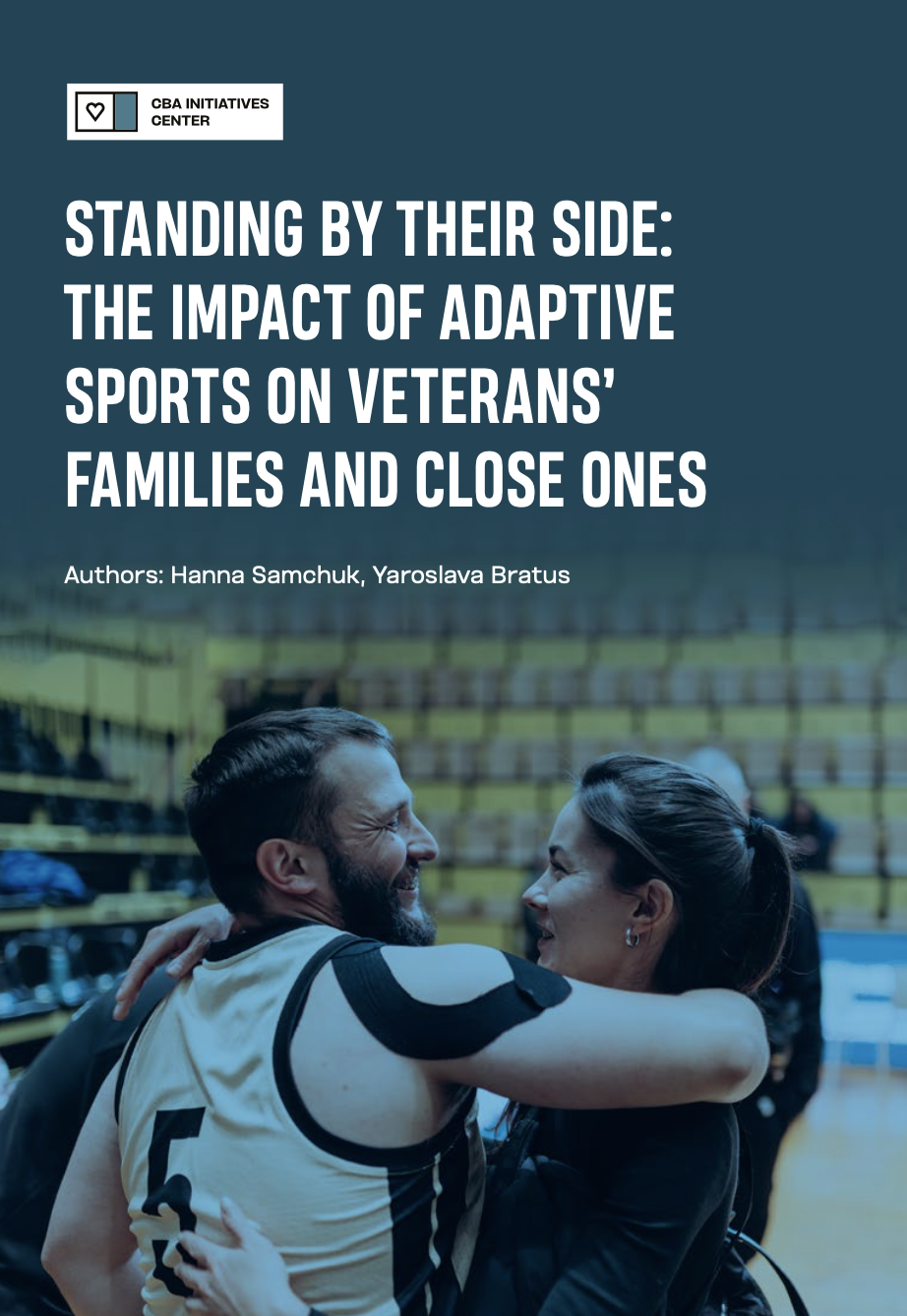
To view the full study, click on the document cover.
Share