

"Trump is bluffing. And we can’t say it’s a bluff" — Belieskov on shuttle diplomacy, Ukraine’s goals, and the frontline in 2025
Mykola Belieskov is a Senior Analyst at the Come Back Alive Initiatives Center and an expert at the National Institute for Strategic Studies. Suspilne TV met with him as Donald Trump marked his first 100 days in office, and Ukraine continued its efforts to maintain U.S. support. In the “Removska Interview” project, Belieskov discusses U.S. talks with Ukraine and Russia, Kyiv’s priorities in a long war, and Russia’s capacity to sustain it. (The video version is in Ukrainian.)
On the U.S. bluff
During his campaign, Donald Trump promised to quickly end the Russia-Ukraine war. How would you assess those efforts after his first 100 days in office?
I’ve posted several times trying to make sense of the framework Trump is operating within. And even back in December, early January, I was saying it would be difficult for him — just as it was for his predecessor, Joe Biden. The main issue was clear before any rounds of bilateral talks: there is no room for compromise between Ukraine’s and Russia’s positions.
As a result, we now see that Trump is getting nowhere. And he doesn’t like that. You can already sense some nervousness creeping into his rhetoric — it started about a month ago. But even before he took office, it was obvious that finding a settlement formula both sides would quickly accept would be a major challenge.
Why does the U.S. seem to expect multiple concessions from Ukraine, not Russia — at least judging by public statements?
The war is happening on our territory. We’ve lost part of it. Our position is weaker. Even under Biden, it was already clear that any settlement — if one were reached — would not fully align with our interests. You won’t find a single statement from the Biden administration saying that victory for Ukraine means restoring control over all of its territory.
The challenge for us is to prevent a settlement from being achieved solely at our expense. And here we run into problems. First, there’s Trump’s personal dislike of Ukraine. It stems from 2016 and the 2019–2020 period, although in both cases he has only himself to blame — for hiring shady political consultants or engaging in conduct inconsistent with what a U.S. president is supposed to do.
Another reason: when Volodymyr Zelensky presented the "Victory Plan" in the U.S. last September, he visited a munitions factory in Scranton, Pennsylvania — one of the swing states that ultimately decided the election outcome. Some Republicans believe that was a move to support the Democrats.
Then there’s Trump’s worldview. He believes: “The stronger you are, the more right you are.” In his mind, the annexation of Crimea and the outbreak of the war are consequences of our “weakness.”
Trump, his entourage, and parts of the Republican Party also see the international order — the one we appeal to — as being against U.S. interests. They think that both allies like Germany and adversaries like China have gained far more from this order than the United States has. So they see no point in defending it.
How much room for maneuver do we have in these circumstances?
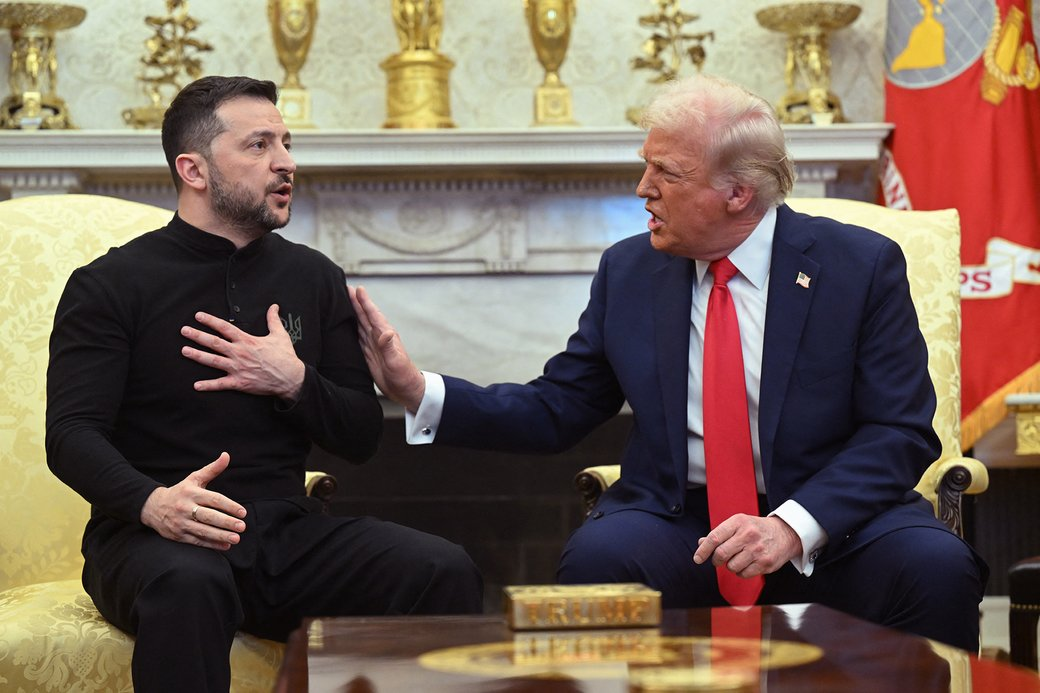
Our approach leading up to the U.S. election was this: we understand Trump’s worldview differs from Biden’s in some ways, but we’re not cutting off contact. We’re trying to keep the dialogue going. Andriy Yermak visited Washington in December. There were attempts to persuade the new Trump administration. Then came that emotional meeting at the White House — the argument between Donald Trump, J.D. Vance, and Volodymyr Zelensky. Now we see the limit of efforts to persuade Trump — he continues to insist that Ukraine must make painful compromises. Especially when it comes to security and sovereignty — issues on which, in my view, no compromise is possible.
The more we try to engage Trump and maintain contact, the more he sees value in mere U.S. presence for Ukraine. But that’s not the case. What we care about is effective presence — providing aid, imposing new sanctions on Russia, rallying international support. Instead, the U.S. has effectively handed over leadership of the Ukraine Defense Contact Group to the UK and Germany. The more we try to convince Trump, the more he tries to play on that. Take, for example, his statements like “either there’s progress [in talks], or we slam the door and walk away.”
And here President Zelensky faces a difficult choice. He could go out and say: “We understand that you, Americans, are bluffing.” Because that’s what they’re doing. None of the realistic scenarios involving further U.S. participation — or non-participation — in the talks envisions new aid packages for Ukraine. But we don’t dare come out and call it a bluff.
How long can this continue?
We definitely won’t be the ones to say that Ukraine is withdrawing from the trilateral dialogue. We can’t afford that. As long as Trump is willing to engage, we will be too. If he slams the door, then we’ll start implementing a Plan B.

On Concessions at the Negotiating Table
What would it look like in practice if the United States withdrew from the negotiation process?
First, we would see the end of shuttle diplomacy — between Ukraine and the US, and between the US and Russia. There would be no new military aid packages. Admittedly, we haven’t seen any since January 20. Still, nearly $4 billion remains unspent from the package passed by Congress a year ago.
The only open question is what will happen with the long-term assistance contracted under the Biden administration. Since summer 2022, the US has signed contracts for weapons manufacturing at American plants worth at least as much as the aid already delivered from US stockpiles over the past three years. Neither the US nor Ukraine has commented on these commitments. The volume is estimated at $35 billion and includes interceptors for air and missile defense systems, HIMARS munitions, and artillery shells for howitzers.
So the clearest signs that the US is "slamming the door" would be the collapse of these bilateral channels and the absence of any further aid approvals. We may also see a broader American reassessment of its role in European security. There have already been reports of plans to scale down the US military presence in Central and Eastern Europe by withdrawing at least 10,000 troops. Washington may even choose not to appoint a new commander of US European Command, who also serves as NATO’s Supreme Allied Commander Europe. That post is currently held by General Cavoli, whose term is expected to end this spring or early summer.
Ukraine’s situation is now part of a broader pattern: the Trump team’s skepticism toward European security.
In the recent three months, we’ve heard US calls for Ukraine to make concessions — for example, to give up NATO ambitions or Crimea. Where might Ukraine realistically compromise?
NATO membership is a matter of sovereignty. We might not exercise our option to join the Alliance for some time. But having that option is an expression of our sovereignty. Finland, until 2022, was in no rush to join NATO, but it maintained the option.
Without security, Ukraine cannot be rebuilt or develop economically. What Trump is proposing is a rejection of Ukraine’s future. Under such circumstances, despite all the problems we face on the battlefield, it is more rational to continue fighting than to accept a drawn-out political death.
Sovereignty and security are non-negotiable.
As for territory, President Zelensky said in December 2024 that Ukraine acknowledges it will not restore full territorial integrity quickly — a significant concession. We are ready to pursue the return of occupied lands through political and diplomatic means. But we will never agree to their loss de jure.
What is the potential for support from the EU and the UK?
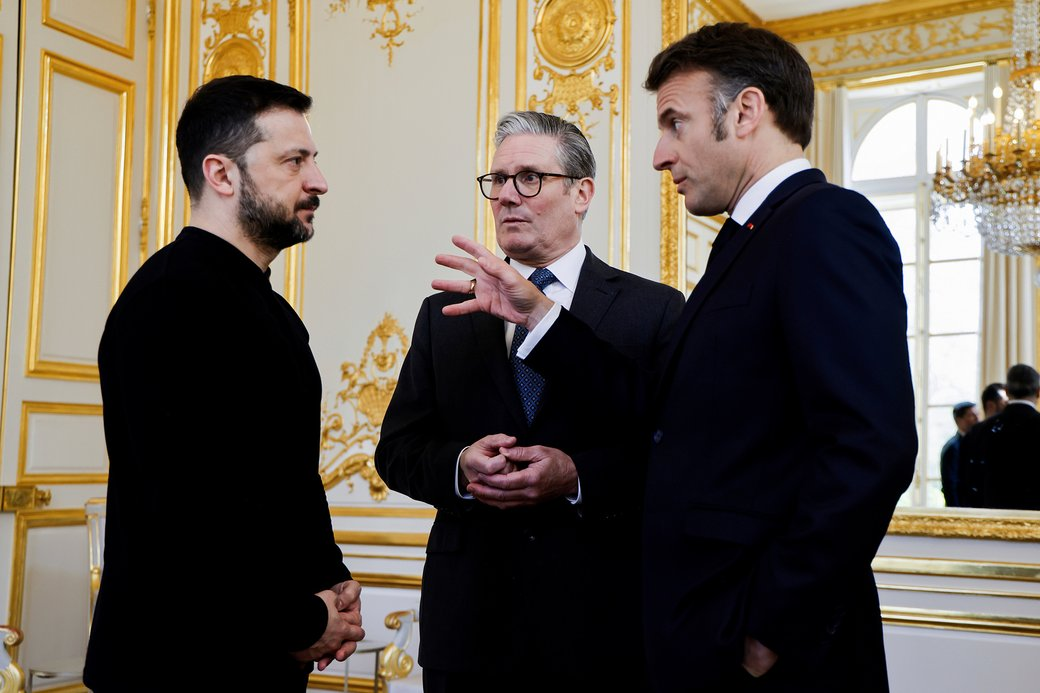
In terms of volume, European aid has matched or even exceeded that of the US. The downside is that the European defense industry lacks sufficient capacity in certain areas, particularly air and missile defense and intelligence capabilities. Without fresh US assistance, Europe will not be able to cover the gap quickly.
But Europe is not monolithic. Germany has ramped up the production of ammunition and arms, and its aid packages are now substantial — covering both ammunition and various types of armored vehicles. Central and Eastern European countries are also increasing their defense spending as a share of GDP. The same goes for Scandinavia. Meanwhile, Southern European countries like Spain and Italy are only now moving toward the NATO benchmark of 2% of GDP on defense — and that’s already insufficient. France and the UK are valued for their diplomatic efforts, but their defense spending remains inadequate.
There’s another risk: what if Trump issues Europe a blunt ultimatum — you’re either with me or with Ukraine? How would our partners respond then?
Why would Trump pose such an ultimatum in the first place?
With Trump, anything is possible. Who would have imagined in February 2024 that Washington would pressure Ukraine to show willingness for a ceasefire even before talks began, and without receiving any security guarantees? We must be ready for any scenario.
And where does Russia fit into Donald Trump’s value system?
Trump’s team mistakenly believes that the war has made Russia so dependent on China that the US must break the Beijing-Moscow axis. Russia has indeed become a kind of strategic rear for China — a source of raw materials. The American logic is that Moscow’s neutrality in the US-China rivalry can be bought through some form of settlement.
In fact, with the exception of Trump’s first term, most US administrations since the Cold War, starting with George H.W. Bush, have harbored illusions that Russia could be integrated or at least constructively engaged. Even Biden came into office hoping to build a “stable and predictable” relationship with Moscow. In practice, that meant no NATO membership for Ukraine — although he never explicitly shut the door on it.
Such efforts have been a recurring theme among American presidents. The lone exception was Trump’s first term, when domestic politics made cooperation with Russia politically toxic.
But the reality is that Russia and China share far more common interests than differences. It is naïve to believe that concessions at Ukraine’s expense will weaken that partnership. Yet Trump continues to buy into that illusion.
There may also be economic incentives at play — a desire to make money. Think of Arctic development, or the idea — yes, we remember — of restarting Russian gas exports to Europe through Ukraine’s pipeline system. Or even reopening Nord Stream 1, in exchange for giving US companies a cut of the profits. Trump could then sell this to his voters: “Not only did we break up the Russia-China alliance, but we also made money doing it.”
On Ukrainian Weapons Production
The Ministry of Strategic Industries recently reported a sevenfold increase in Ukraine’s capacity to produce weapons and military equipment over the past year
This is a significant achievement, largely prompted by the suspension of U.S. military aid from autumn 2023 through April 2024. That pause forced us to experiment and adapt. Today, 60–70% of enemy targets on the front line are struck by domestically produced drones. In terms of weapons deployed at the front, we are far less dependent on our partners than we were at the start of the war.
Back then, it was primarily an artillery war. Today, it is first and foremost a drone war. The declared target for this year is to manufacture 4 million drones, mostly short-range strike UAVs designed to hit targets 10–15 km deep behind enemy lines. Not all of them will be immediately operational — some will require firmware updates and technical adjustments. The war is highly dynamic: even the frequencies on which drones operate keep changing, to say nothing of the ongoing challenge of manufacturing munitions, which are still often produced in makeshift conditions.
Still, this is a considerable success. We will continue to develop our strike capabilities — drones, missiles (both cruise and ballistic), light armored vehicles, ammunition, mines, and artillery shells.
The one unresolved issue is interceptors for air and missile defense systems. This will be a tough challenge. Some European countries do have stocks of such missiles, but whether they are prepared to share them remains an open question.
Could there be a period when we are more vulnerable to Russian missile attacks?
We have already experienced such a period — in spring 2024 — and we remember what happened to the Trypilska thermal power plant. It was destroyed.
Is there a risk that we will be left relying solely on European support?
Yes. But if we manage to hold out for a quarter or half a year without U.S. assistance — and do so without collapsing — our supporters in the U.S. will use that fact to pressure the Trump administration. The Republican Party is not monolithic. Alongside skeptics, there are those who believe helping Ukraine aligns with American interests. We need to give those people as many arguments as possible.
Still, we must prepare for a worst-case scenario.

On Mobilization and the Transition to Army Corps
We’re seeing a variety of approaches to expanding the ranks of the Defense Forces. There is the general mobilization process, individual brigade recruitment efforts, and a project offering contracts to citizens aged 18 to 24. What should the government’s priorities be?
When we last spoke — in autumn 2023 — public debate about mobilization was just beginning. The core problems remain unchanged. Many of those considering enlistment are held back by the same concerns that were voiced then. Efforts are being made to address them, but quick solutions are elusive.
Still, we are seeing certain steps forward: the halt in forming new brigades, the redirection of new recruits to more experienced units, the reform of command structures, and the extension of basic military training to 45 days. It should have been at least 90. Some brigades compensate by continuing training on their own bases after the initial course.
Unfortunately, there will always be people who — even under ideal conditions — say they are not ready to join. That presents a dilemma. A democratic state must respect individual rights and regard human life as its highest value. At the same time, it must recruit people into the Defense Forces — and that means showing a different face when necessary. There is no single solution that can fully resolve this tension.
Do you place much hope in the shift to a corps-based military structure?
In theory, it should address the certain chaos in the command system. A corps is a permanent structure with established vertical and horizontal coordination. It prevents situations where battalions from different brigades are deployed to the same sector but do not communicate with one another. Russia’s advances in 2024 were not the result of superior combat performance, but rather a consequence of our disorganization.
In a corps structure, the battalions holding a defensive line are more likely to belong to the same brigade or at least to brigades within the same corps. That ensures a certain level of coordination. It also improves horizontal interaction. At present, operational and tactical groupings are formed on a temporary basis. It takes time for people to get to know one another — commanders and subordinates alike. Then rotation ends, and it all starts from scratch.
But there’s a wide gap between theory and practice. It will take time for brigades to truly function as corps — to develop officer cadres and establish stable lines of command and coordination. Quick transformation should not be expected. But without these first steps, there will be no results.
This brings us back to an issue consistently raised by the Come Back Alive: education and the human factor. We have lost many skilled professionals. Without stabilizing the quality of our personnel, we won’t unlock the full potential of the hardware we are producing. That’s why educational initiatives are so important — though their impact will take time, and time is always in short supply.
When you speak of changes in the education system, do you mean basic military training?
That’s one aspect. The other is officer training at all levels. Officers are the glue that holds everything together. They make it possible to achieve synchrony and scale — two key factors in delivering effects at the higher levels of war.

On Russia’s Capacity to Keep Fighting
For the first time in three years, Russia proposed a truce over Easter. It never became comprehensive — Russian forces violated it. Now, Putin is suggesting a new “ceasefire” for May 9. What does that mean?
It’s part of a diplomatic game. Just as we’re trying to craft a formula to avoid provoking Trump while defending our own interests, Russia is playing a similar game. One element of that game is their apparent willingness to engage in bilateral talks with Ukraine without preconditions. Not long ago, they were calling Zelensky illegitimate and insisting they’d only negotiate if we met their demands.
Under what conditions could direct talks between Ukraine and Russia happen?
Apart from the National Security and Defense Council’s decision not to negotiate with the Russian leadership, there’s nothing that actually prevents us from doing so. The real obstacle was Russia’s own position.
But talks are just a tool — they don’t guarantee results. The Americans, the Russians, and we ourselves all say that a frozen conflict is unacceptable. But given the current balance of resources and positions, the only short-term realistic outcome is a de facto freeze.
Based on Russia’s capabilities, is it even in their interest to pause the war?
Russians tend to mask their doubts with hyper-confidence and aggression. They never acknowledge internal problems or contradictions. In 2025, we have to assume that Russia can sustain its current tempo of warfare. But even Russia cannot afford to lose half a million troops every year. Last year alone, estimates suggest they suffered 450,000 to 500,000 killed and wounded. Despite their demographic advantage, even they have limits. But they will never admit it.
We need to reach a point where Russia is losing more troops on the battlefield than it can mobilize. So far, they’ve been offsetting their losses with fresh recruits. Over the past year and a half, their armed forces have grown from 400,000 to 620,000 personnel.
Where is the breaking point — the moment when Russia can no longer sustain this intensity due to losses? I don’t know, but it certainly exists.
There have been reports of North Koreans and even captured Chinese mercenaries fighting on Russia’s side. What does that say about Russia’s manpower situation?
It reflects their reluctance to announce another wave of open mobilization. They’re trying to fill the ranks with mercenaries instead. Will that become a broader trend? That remains to be seen. For our part, we’ve also tried to recruit foreign military volunteers, including from Latin America. The strategy is symmetric. But whether it becomes widespread is still an open question.
President Zelensky said in March that Russia is preparing a new offensive. What are the most likely risk areas?
Right now, Russia’s biggest gains are along the Kupyansk axis — Borova and Lyman. The front line there is under pressure but hasn’t collapsed; there are no breakthroughs. They’ve also made some localized advances near Toretsk. Much of the town is already under Russian control.
But the main target of their next offensive, which will likely intensify in May, is Pokrovsk. The terrain there works to their advantage, and fighting is already taking place near the city’s outskirts. The Donetsk region as a whole will remain their top priority.
There’s been a lot of talk about Sumy, especially after Russian forces pushed us out of parts of the Kursk region. There is some pressure there, yes. But politically, Russia will continue to focus primarily on Donetsk.
You mentioned the Kursk region. How would you assess the Ukrainian operation there?
There’s likely to be ongoing debate about that. I hope it will be a professional one. Perhaps, in preparing the “Victory Plan,” we needed to show that despite our challenges, we can still act boldly and effectively. We also leveraged the fact that Russia couldn’t ignore the occupation of its own territory — they had to retake it. As a result, they paid a heavy price, both in equipment and manpower.
Unfortunately, we didn’t have enough resources to pose a real threat to the Russian grouping looming over Kharkiv, or to force a retreat. Nor could we divert enough Russian forces from Donetsk to stabilize the line there.
Still, under these constraints, we managed. Many underestimate how limited our options were in summer 2024. We couldn’t just sit back and let the Russians slowly grind forward in Donetsk, inching toward Pokrovsk. We had to act asymmetrically — and we did.
What do you expect 2025 to look like? What should we realistically prepare for?
Our objectives haven’t changed since autumn 2023, when Ukraine was forced into a defensive posture. We have to inflict damage on Russia significant enough to compel them to end the war.
So far, we haven’t succeeded. But there are no other options. The terms currently offered — by both our partners and the enemy — mean prolonged agony. Ukraine must prepare for a scenario in which Trump remains unpredictable and we’re eventually left to face Russia with only Europe on our side. But that wouldn’t be the end. We’ve already shown the ability to act creatively, to find new ways to strike, to develop new capability clusters.
The crucial issue is reaching a consensus between the public and the leadership on what “victory” actually means. For some, it’s the full recovery of all territories. For others, it’s halting Russia without surrendering sovereignty and securing a certain level of national security. We have to agree on this. Otherwise, we won’t be able to align our goals, resources, and tools — the classic triangle — and make it work.
That, more than anything, is what we’re missing.
First published in Ukrainian, Suspilne News
Translated by CBA Initiatives Center
Share