
Anton Muraveynyk about the frontline in 2026, systemic issues within the military, and mobilization research.
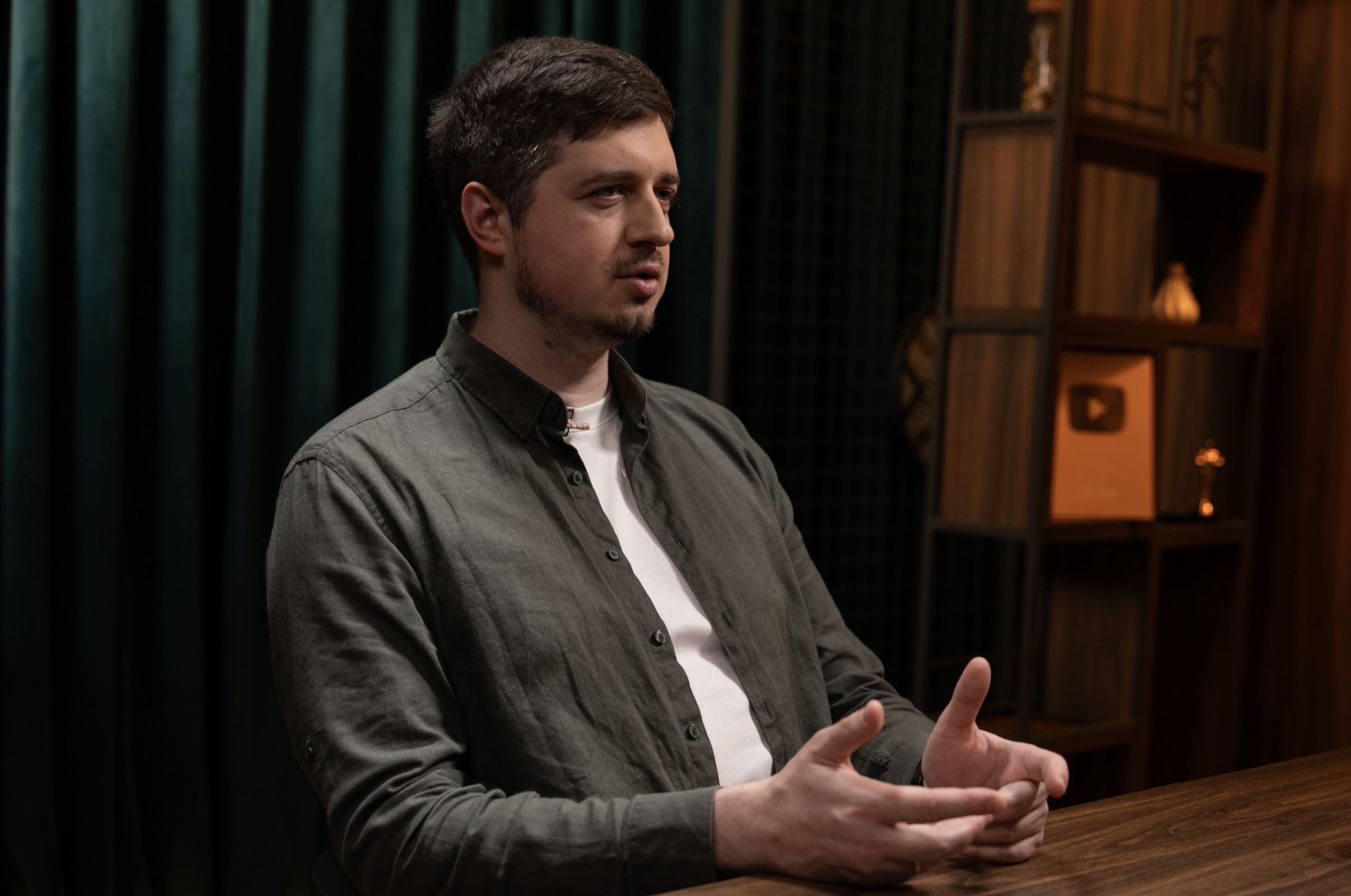
Anton Muraveynyk, Head of Analytics at the CBA Initiatives Center, recently appeared as a guest on the Removska Interview project for the "Suspilne News" YouTube channel.
The discussion centered on systemic challenges within the management of the Defense Forces, the prospects of U.S.-led negotiations, and the digital isolation of the Russian Federation.
A condensed version of the conversation is provided below.
At “Come Back Alive,” we have a tradition: at the end of each year, we create a calendar based on our findings. This time, we produced two versions. One was intended for widespread distribution — a limited-edition version featuring several dates on a metal plaque. Those were the dates people believed the war would end. But it didn’t.
We distribute these plaques to key partners in Ukraine and abroad. We want to show: look, you can count on anything, but that won’t stop the war. And the way the so-called negotiation process unfolded over the past 25 years has only highlighted this once again.
“Come Back Alive” will soon mark its 12th anniversary. We have seen many negotiations, truces, and ceasefires. But Russia is still here, it still poses a threat. And, therefore, we continue our work, and Ukraine’s defense forces continue their fight.
All of us — state, people, businesses, institutions — must be prepared for the war to continue. And even if it shifts to a lower-intensity phase, the threat will not disappear. And we know that both we and the defense forces have a lot of work to do to improve systems and processes, to reform the education and training system, to reform mobilization, and to overhaul personnel policy in general. There will be work for everyone.
The U.S. sees a need to build closer ties with the Russian Federation because it has a strategic plan to separate Russia from China. That is why, when it comes to ending the war, they are putting more pressure on our side. Therefore, the prospects of ending the war through diplomatic means seem unlikely. This diplomatic dialogue simply leads nowhere.
The Trump administration, and the U.S. president himself, sometimes think in a rather linear fashion. I don’t know why this is the case, but it’s evident both in their current actions in the Middle East and in their dealings with Russia. It’s as if they operate on a single premise: if we do this, then that will happen. Other factors, other influences, and other players are either not analyzed, or the analysis is disregarded.
I like that our government officials communicate the course of the negotiation process quite openly. Certain proposals — such as exchanging territory for certain guarantees, for example — are even ridiculed, it seems to me, by our officials. Because it’s absurd and that’s communicated appropriately.
I have mixed feelings about the goal set by Defense Minister Fedorov to eliminate 50,000 Russians on the front lines every month. On the one hand, it’s a good goal — it’s measurable. On the other hand, if we start thinking about what it depends on, problems arise. If the Russians attack less, they will suffer fewer casualties. If they switch tactics from infiltration to something else, it may be harder to achieve such figures. It also depends on our supply of resources, the level of manpower and the quality of their training, and the distribution among military units.
One of this year’s trends will be the further proliferation of ground-based robotic systems. There are high hopes for these systems on both our side and the Russian side. But for now, their greatest potential lies in the areas of logistics and the evacuation of the wounded and dead. There are doubts regarding the effectiveness of their use in an offensive, or in autonomous operations specifically as a ground component.
The Russians will intensify the closure of their information space, isolating it from the world outside. They will complicate the exchange of information within the country. One of the reasons this is being done is the likely intensification of mobilization measures in the country.
Ukraine’s strikes on Russian oil facilities and related logistics are an entirely appropriate and legitimate target. This applies in particular to port infrastructure. Just under half of Russia’s total oil exports pass through the Baltic Sea. The key ports are Primorsk and Ust-Luga, the old and new terminals. Over the past month, there have been a series of strikes specifically targeting these ports. This does indeed have a direct impact on how much oil Russia can sell and how much money it receives for it. This is a critically important sector, and I am very pleased that our forces have begun to focus their strikes on such specific targets. These strikes must be systematic, because, unfortunately, the infrastructure is largely being restored.
Over the past few years, Ukraine has built up its capabilities to strike deep into Russia and will eventually develop its own ballistic weapons. Russia is doing everything it can to prevent this from happening. It’s a multifaceted story, because it involves relations with our partners — who can sell what to whom, and who cannot sell what to whom. Russia influences a number of countries through its ties with them. All of this is a complex challenge, not just a technical one. But there are experts in these fields, and there are those who employ them as well.
To change the situation on the battlefield, we need far more changes in the defense forces, not just in terms of corps structure. The scale to which we have expanded the Armed Forces, their organizational structure, is unsustainable. It is impossible to fill these ranks with people; it is impossible to find the resources for this. For example, every corps should have a heavy mechanized brigade, or at least most of them should. A heavy mechanized brigade is what used to be a tank brigade. Each such brigade has two tank battalions. Do you think they have tanks in even one battalion? No. And if they do, there aren’t enough.
The extent to which we’ve bloated the army’s organizational structure is probably the number one problem right now. Because all other problems stem from it. The desire to have a large army during a major war is normal, especially when you’re fighting against a larger country with a large army. It’s just that we can’t afford it.
And instead of forming a single corps with all fully staffed brigades, we’re effectively creating three corps, each with understaffed brigades. Most of our combined-arms brigades have a fairly low staffing level. The problem lies in how this is calculated. Because many include seconded personnel in their counts, which can make the percentages look decent on paper. But in reality, there might be 2,500 people in the operational area, of whom only 50 or, say, 150 are actually on the front lines. Everything else is mostly support personnel. And the question is, does such a brigade even make sense?
The shift in the paradigm and structure of the command hierarchy was the right move — from temporary headquarters to permanent ones. The issue is that all these corps are designed for a number of personnel that the Ukrainian army will most likely never have. And so the question is: does it make sense to count on something that will never happen?
The creation of assault troops is logical given the current situation in the Armed Forces. The capabilities of conventional combined-arms brigades are deteriorating because the brigades have suffered losses for many years in a row. Experienced personnel were wounded or killed. Personnel were replaced by people without a military background, with civilian experience. And the average quality of personnel training has declined significantly over the years. The same is true for our enemy.
As a result, line brigades have lost their ability to carry out certain tasks. On paper, the brigade exists, but it lacks brigade-level capabilities. That is why the assault forces were created. They do not have their own area of responsibility; in fact, they serve as the commander-in-chief’s operational reserve and are deployed along the entire front line wherever the situation deteriorates. In other words, they are rapid-response units.
It’s a good tool; it works. Should it be this way? Probably not. Should we have changed the military structure and optimized the organizational structure long ago? Yes.
Another matter is that attitudes toward these assault troops vary. What’s interesting to me is that civilians have a worse attitude toward them than the military does. Once, a soldier told me that if he had a choice — say, between joining the 150th Brigade or an assault regiment — he’d go to the assault regiment. Because at least there, they get training. They really train people there, investing heavily in their capabilities and tactical medicine. And regiments vary; there are many of them, so you can’t generalize.
As for cases of pneumonia during basic military training — this is, unfortunately, a systemic problem within the Armed Forces. I don’t have statistics on how many people die each year at training centers. I suspect the number would be grim. It’s unlikely to be extremely high, but such cases do occur.
Historically, there has been a certain tension in the relationship between the Ministry of Defense and the General Staff in Ukraine. This happened even before the full-scale war. Unfortunately, this has a negative impact on the course of hostilities. I know that many people demonize the General Staff. But this is unjustified: the General Staff is home to a vast number of uniquely intelligent people. They are top-tier specialists. The front line still exists, doesn’t it? We are holding our positions; there are no enemy breakthroughs into our operational depth; our statehood remains intact.
I understand that most service members fight at the tactical level. But as someone who has at least had some exposure to service at the operational level and has encountered the strategic level, [I will say that] it is a completely different kind of service. And the challenges there are entirely different. Managing a million people on the front lines is no easy task. People undergo special training for this, go through specific stages of service, and it is truly difficult.
That is why I cannot help but respect them. Because the army is still holding together. And an important task now is to establish constructive cooperation between the Ministry of Defense and the General Staff. So that the General Staff, on the one hand, makes realistic requests, and the Ministry of Defense ensures the timely fulfillment of these requests, including procurement, and sound state policy.
I can’t say that the commander-in-chief needs to be replaced. On the one hand, regular turnover in such positions is a positive thing. On the other hand, the key issue isn’t the length of service but whether the person has exhausted its potential or not. I can’t say that, as I don’t have all the information. Also, there is obviously a certain level of trust between the Supreme Commander-in-Chief and the Commander-in-Chief, and an understanding that the assigned tasks are being carried out. In general, the war is changing, and the need for changes in how the war is conducted is significant. Without changes, we’re “doomed,” so to speak.
On the topic of mobilization. We view it as part of the larger problem of training defense force personnel. Back in 2024, I asked a representative from the Ministry of Defense: do we know how many of the 30,000 mobilized each month actually end up in combat roles within combat brigades? They didn’t know. We then conducted our own study, it turned out that at most a third.
When we asked representatives of the General Staff why the need was specifically 30,000 per month, they replied, "We need much more, but training centers can only prepare exactly 30,000 in a month." But in reality, this capacity does not exist. We cannot train that many; it’s self-deception. When there are 70 cadets per instructor when the standard is 6–12 that’s not training. When, out of the pool of mobilized people delivered to training centers, 5,000 prolonged absences without leave in the first month or two — that’s not training. If people aren’t healthy enough to pass the basic military training, even if they arrived as “fully fit," they're still being treated the whole time and aren’t undergoing training.
In other words, through the mobilization system, we’re overloading the training system, overloading and demotivating instructors, and so on. We’re spending resources on service members whom the brigades don’t actually need, because they need people for combat roles, not those with limited ability to perform tasks. As a result, mobilization largely fills rear-echelon positions — and we create an imbalance within the brigade.
Legally, the mobilization process ends at the gates of the training center. For this machine, which has done the work of delivering a person here, this is a measure of efficiency. And the fact that this person will never fight means nothing to it. In our opinion, this is incorrect. Because all these problems, ultimately, fall on the shoulders of the Armed Forces. Two-thirds of the people [out of the total number mobilized per month] become a burden on the Armed Forces. They will continue to receive medical treatment, serve in these rear-area positions, in these newly formed units—electronic warfare battalions, logistics battalions—and will simply be stationed somewhere out there. People are needed there too, of course, but imagine what a burden this is on the budget. We don’t have enough data to calculate it precisely, but off the top of my head—it’s over 100 billion hryvnias a year.
Can we afford this? No, we can’t. Are we currently asking our international partners for money to pay our troops? The president has even said as much—we are asking. But then the question is: how are we using the money we already have?
It is easier for Military Medical Commission (MMC) representatives to issue a “fully fit” designation—because as soon as they issue an “unfit” designation or refer a person for re-examination, they immediately come under scrutiny by oversight agencies—to prevent corruption risks. In other words, every “unfit” or “limited fit” designation from the military medical commission serves as grounds for an investigation. And in fact, it turns out that this link is fictitious.
We inherited a mobilization system from Soviet times, when enterprises, institutions, and local authorities were responsible for keeping track of those subject to military service. This worked for us in 2014 and 2022, when there was a substantial registered military reserve. Once that was exhausted, the responsibility was effectively shifted to the lower echelons—the police and the military recruitment office's mobilization units. And who actually coordinates this process, ensuring alignment between the military’s needs and the means of mobilization? Formally, the Cabinet of Ministers—but the government’s primary tasks are ensuring economic stability and protecting critical infrastructure. And there are plenty of tasks there.
A soldier’s basic pay is 23–24 thousand hryvnias. For people serving in Kyiv—for example, at the General Staff—this money isn’t exactly enough. Some live in their offices, while others commute 100 kilometers home every day. They look for side jobs—often as taxi drivers. The most common topic among military personnel handling logistics at a training center near Kyiv, for example, is that they drive into Kyiv in the evenings to work as taxi drivers.
The issue of changing the pay system is long overdue. One option is to switch to a contract-based system. This is harder to do now than it was in 2015–2016, when we also converted the mobilized army to a contract system. Now the scale of the problem is greater, the need for money is greater, and the economic situation is worse. But it is possible.
What causes skepticism among the troops? Two things. First, if there’s a contract, there will be some kind of deferment for a certain period. Right now, they’re talking about a one-year deferment. That’s too short. For some, a full return to civilian life takes several years; for others, it never happens. But just to go home, sort out the basics, relax somewhere, and get some sleep—that takes about three or four months. Then a person starts looking for a job—but who’s going to hire you if you’re going to be mobilized again in six months? Either people will go to work with a deferment, or they’ll leave the country illegally.
We know for certain that some people will return to service, and that’s only natural and normal. A fairly significant portion—half, I think—will return to service anyway within the first year. But even so, this one-year deferment isn’t even taken seriously.
And the second issue that concerns the military is one of basic fairness. Why should someone who is now signing a contract from civilian life have the same conditions—a one-year contract, a one-year deferment—as someone who served until the age of 22? Six years [of service], for example—and to qualify for deferment, they have to sign another one-year contract—and only then will they receive deferment.
We cannot afford to have the same conditions for everyone. When a third of the army goes on deferment—well, that’s impossible. On the other hand, there definitely needs to be an element of fairness. And that’s not hard to do. If they want to raise pay for contract soldiers on new contracts—then raise it even more for those who’ve been in the army longer. Or give them some extra time before their deferment. That’s something that can be done.
Поділитись